
People inherit rugs, buy them on holiday, carry them from one house to the next, or pick one up because it matched the sofa — and then have no idea what they are standing on. That matters, because the single most expensive mistake in rug ownership is treating an heirloom like a doormat, and the second most expensive is paying heirloom money to clean a doormat. Here is enough to tell the difference.
How a Rug Is Actually Made
Every pile rug is built on a grid. Vertical threads called warps run the length of the rug and are what the fringe is — the fringe is not sewn on, it is the foundation poking out of both ends. Horizontal threads called wefts run across and lock each row in place. Whatever sits between them, and how it got there, is what separates a thousand-dollar rug from a hundred-dollar one.
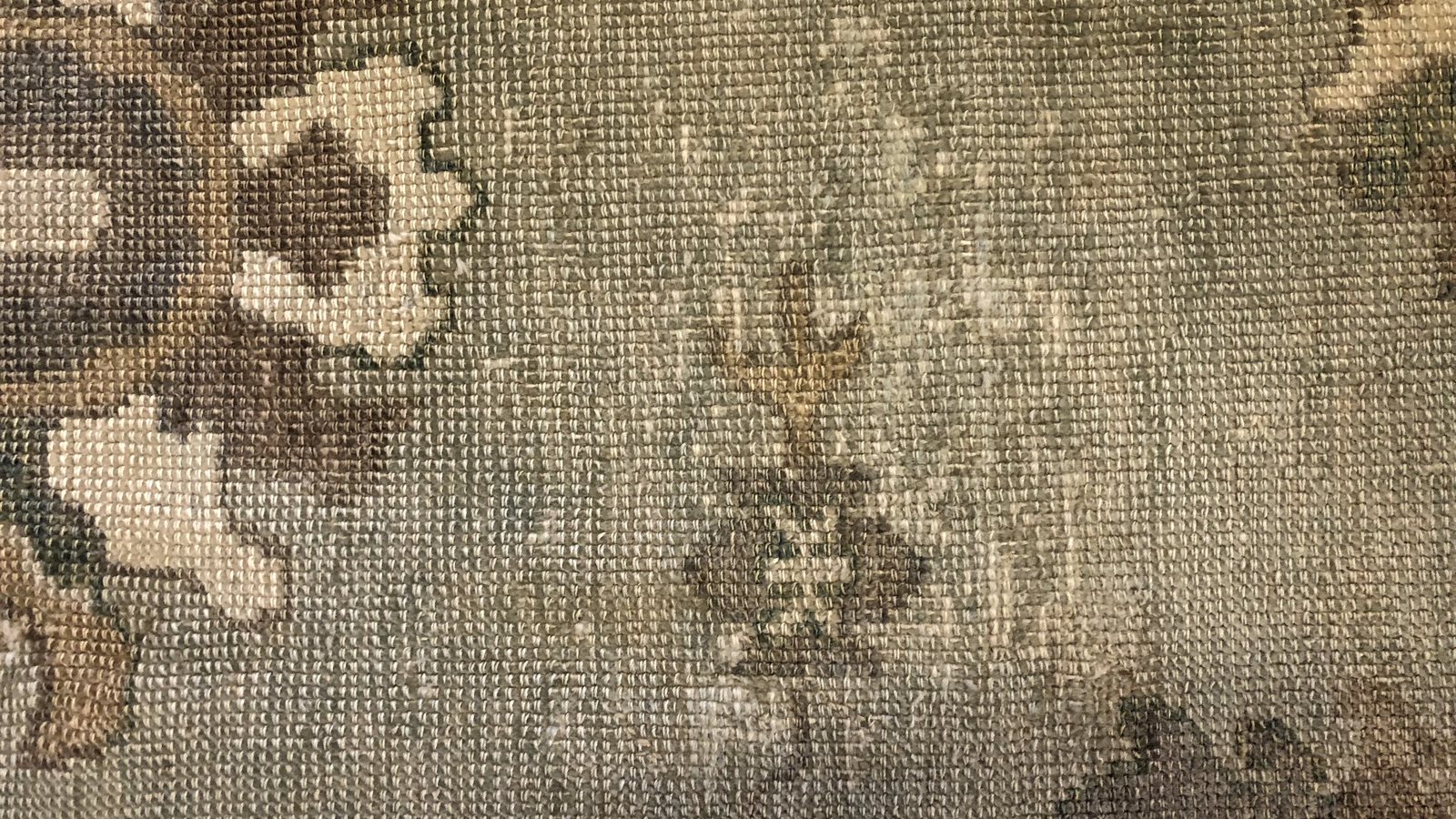
In a hand-knotted rug, a weaver ties individual loops of wool or silk around pairs of warps, packs a row down, passes a weft, and does it again. A nine-by-twelve with a middling knot count contains a couple of million of them. That is why a real Persian rug costs what it costs, and why it can survive three generations, a house move and a wet floor.
Knot types
- Persian (asymmetric) knot — wraps one warp fully and passes loosely behind the other. Allows finer detail and curved patterns, so it shows up in Persian, Indian and Chinese weaving.
- Turkish (symmetric) knot — wraps both warps evenly. Sturdier, slightly more geometric, common in Turkish and Caucasian rugs.
- Tibetan loop knot — wool looped continuously over a rod, then cut. Modern and fast, and the reason contemporary Nepalese rugs have that thick, even pile.
Telling Hand-Knotted from the Rest in Ten Seconds
Turn the rug over. That is the whole trick, and it settles the question faster than any label.
| Construction | The back looks like | What it means |
|---|---|---|
| Hand-knotted | The pattern is visible on the back, in slightly imperfect knots. Fringe is continuous with the foundation. | Decades to centuries of life. Fully cleanable and fully repairable. Holds value. |
| Hand-tufted | A canvas or scrim backing glued on, hiding everything. Fringe is sewn on as a separate strip. | Ten to twenty years. The latex adhesive eventually fails and smells. Cleanable with care. |
| Machine-made | Perfectly uniform grid, often with a stiff synthetic backing. Faultlessly regular, which is the tell. | Five to fifteen years. Very cleanable, essentially not repairable. Inexpensive to replace. |
| Flatweave (kilim, dhurrie) | No pile at all. Same pattern both sides, reversible. | Durable and light. Needs careful moisture control in cleaning. |
Quick field test: bend the rug back on itself and look at the base of the pile. Knots tied around visible warps mean hand-knotted. A wall of glue means tufted. If the wool crackles rather than bends when you do it in February, that is the heating season talking — see the care notes below.
Fibres, and What Each One Wants
Wool
The default for good reason. Wool fibres are naturally coiled, so they spring back under furniture; they carry lanolin, which repels soil until you strip it out with harsh detergent; and they are hard to ignite. Wool is also hygroscopic: at ordinary indoor conditions it holds roughly a seventh of its own weight as water, and it gives that up to dry air. That single property is behind most of the calls we get in this city, because dry wool is not simply wool that feels dry — it is mechanically different, and it breaks where it used to bend.
Silk
Fine, strong in tension, and unmatched for detail and sheen. Also unforgiving: it scorches under heat, weakens when it stays wet, and browns if a spill is left. Keep silk rugs away from direct traffic, away from a radiator or a floor register, and out of low winter sun. They never get a full-immersion wash.
Viscose and other regenerated fibres
Sold under a shelf full of names, all of it regenerated cellulose. It looks like silk in the showroom and behaves like wet paper in real life: it loses most of its strength when saturated, yellows from plain water, and mats permanently underfoot. It is also the fibre that behaves worst in a dry house, holding a static charge and collecting airborne dust faster than anything else in the room. If you own one, keep it out of dining rooms and entryways and never let anyone wet-clean it conventionally.
Cotton
Usually the foundation rather than the pile, and in flatweaves the whole rug. Cotton absorbs heavily, shrinks if it is dried under tension, and is the first part of a rug to rot after a soaking. It also moves with the seasons: a foundation that dries out from October to April and takes moisture back in the summer is a slightly different size in March than it is in August, which is why so many rugs here will not lie flat at the end of winter.
Jute, sisal and seagrass
Beautiful texture, terrible relationship with water. These plant fibres stain from their own moisture, brown at the edges, and take slush badly. An entry hall inside a door that opens onto a salted sidewalk is the worst place in a Louisville house to put one, and a basement or lower-level room is the second worst.
Synthetics
Polypropylene, nylon and polyester. Cheap, fade-resistant, and genuinely practical for a back door in February, a mud room, or a lower level that has flooded once already. They crush under furniture and cannot be repaired, but they clean well and cost little to replace — which is the whole point of them.
Louisville Care Notes
Most rug care advice online is written for a mild climate and quietly fails here. Louisville sits on the Ohio at the north end of this region and has a real winter: the heating season runs from about October into April, the ground freezes and thaws repeatedly, and the roads are treated for months. Nearly everything that damages a rug in this city happens in that half of the year, and almost none of it looks like a stain. Adjust accordingly.
The heating season is the main event
Heating cold outside air without putting water back into it is what makes a house dry. Air that comes in near twenty degrees and is warmed to seventy arrives at a relative humidity in the low teens, and wool sitting in that gives up most of the moisture it normally carries. It goes stiff, it loses elasticity, and it cracks rather than folds wherever the rug is creased. The cotton foundation shrinks over the same months and does not shrink evenly. Keeping the house somewhere around thirty to forty per cent relative humidity through the winter is the single most useful thing you can do for a good rug — a cheap hygrometer on the floor of the room, not on a shelf, will tell you where you actually are. Watch the windows: if they are streaming, the humidity is too high for the house rather than right for the rug.
Take road salt seriously
Deicing chemistry is not ordinary table salt. Calcium and magnesium chloride pull water out of the air at humidities where sodium chloride does nothing, so the residue tracked in on a boot stays damp at the base of the pile long after the white bloom on the surface has been vacuumed off — and the undissolved crystals are hard and angular, cutting wool from underneath where nobody sees it. Shoes off at the door from the first freeze to the last. Use a cheap synthetic mat outside the door and another inside it, and let the good rug start a few feet further in. Nothing you spray removes chloride; it dissolves out in immersion, and an entry rug wants that every spring rather than every other year.
Mind the radiator and the floor register
A cast-iron radiator standing on or beside a rug does not warm the room evenly. It drives a narrow band of very hot, very dry air across the floor around it for six months, and the wool in that band dries out long before the rest of the rug does. The same is true of a floor register blowing along the pile. The result is a stripe of stiff, brittle fibre and a foundation that has shrunk more there than anywhere else, so the rug will not lie flat by March. Move the rug out from under the radiator if the room allows it, deflect a floor register away from the pile, and never fold or roll a rug across that band in the middle of winter.
The grey with no traffic lane is static
In a house sitting in the teens for humidity, nothing dissipates a charge. A wool rug in January holds one that the same rug in July cannot, and fine airborne dust is pulled onto the pile and held down among the fibres rather than sitting on top where a vacuum can reach it. The rug loses contrast evenly, month after month, so there is no lane to point at and most people simply decide the colours were always like that. Raising indoor humidity reduces it. Immersion is what actually removes it, because wetting the fibre ends the charge.
Rotate for the winter sun, not the summer one
This is backwards from what people expect. Under a full deciduous canopy a south or west-facing room is shaded all summer. The leaves come down, the sun drops to a low winter angle, and light reaches several feet further into the room than it ever does in June — onto a band of floor that has been in shade for six months. That band then takes direct sun for the whole heating season. Madder red and indigo go first, the edge is hard rather than soft, and none of it can be reversed. Turn the rug end for end in October, when the fade season here actually starts.
Watch the cold floor, and the humidifier
Warm humid indoor air gives up its moisture on whatever is coldest, and in January that is the floor at an outside wall, a room over an unheated garage, or the strip under a run of glass. A rug lying on one of those is wetted from below on every hard freeze and dried again in the days between. Nothing looks wrong — the pile is dry to the hand — and the first honest signal is the smell of the room after it has been shut for a weekend. If you have a whole-house humidifier, wind it down as the outside temperature falls rather than leaving it at one comfortable setting all winter. Use a breathable pad rather than solid rubber, and lift the rug occasionally to let both it and the floor dry.
Freeze-thaw water arrives late
Nothing comes out of a frozen pipe while it is still frozen. The water arrives on the thaw, hours or days later, under mains pressure, and often when nobody is in the house — which is why the worst rug jobs of the winter start with a split line in an outside wall, a garage ceiling or an unheated crawl. The same thaw ices a sump discharge line closed at its outlet, so the pump runs against a blockage and the pit comes over the top. And meltwater over subsoil that is still frozen cannot go down, so it travels sideways until it meets an old foundation. A wet rug in a heated room has about forty-eight hours before mould takes hold in the foundation. Get it up off the floor, do not seal it in plastic, do not stand it rolled in a cold garage, and get it to a specialist rather than pointing a fan at it. Rugs people were ready to throw out are frequently recoverable. Here is what that restoration involves.
Blot spills immediately, and skip the miracle cleaner
Press a white towel straight down and lift — do not rub, which drives the spill into the foundation and fuzzes the pile. Cool water is enough for most fresh spills. Over-the-counter spot removers are usually high-pH and will strip dye out of wool, turning a small problem into a permanent one. And do not put a hair dryer or a space heater on a damp patch: fast heat on wet wool is how a small spill becomes a stiff, shrunken area you can feel with your hand.
How Often Should It Be Cleaned?
| Where the rug lives | Professional cleaning |
|---|---|
| Entry hall, mud room, inside any exterior door | Every spring, once the roads stop being treated |
| Main living room or hallway | Every 12–18 months |
| Dining room or kitchen-adjacent | Every 12–18 months |
| Bedrooms and low-traffic rooms | Every 2–3 years |
| Homes with pets or allergy sufferers | Every 6–12 months |
| Rooms over a garage, or a finished lower level | Every 12 months, and check the back each spring |
| Any rug that has been wet | Immediately |
Is It Worth Anything?
Value in a hand-knotted rug comes from knot density, the quality of the wool, whether the dyes are natural or synthetic, age, origin, condition, and how good the design actually is. A finely woven antique in sound condition can be worth many times what a large coarse modern rug costs, even though the modern one covers more floor.
Two things people get wrong. First, condition matters enormously — unravelling ends, moth grazing and cracked foundations knock value down fast, and all three are repairable, which is why fixing them usually pays for itself. Second, wear is not automatically bad: an old rug with even, honest low pile and intact structure is worth far more than one with a hole in the middle and pristine corners.
If you are curious about something you inherited or found rolled up in the attic of an old house, send photographs of the front, the back, and the ends. We will tell you what it is, roughly where it came from, and whether it is worth restoring — at no charge and with no pressure.
Short Glossary
- Warp — the lengthwise foundation threads; the fringe is their exposed ends.
- Weft — the crosswise threads that lock each row of knots.
- Pile — the surface you walk on, made of the cut knot ends.
- KPSI — knots per square inch; higher means finer detail and more work.
- Abrash — natural colour banding from different dye lots. A feature of hand-dyed wool, not a flaw.
- Selvedge — the wrapped side edges that keep the rug from unravelling sideways.
- Moisture regain — how much water a fibre holds at a given humidity; wool’s falls sharply in a heated house.
- Hygroscopic — describes deicing salts and urine residue: they pull moisture out of the air and hold it in the fibre.
- Felting — wool matted permanently by being wetted, warmed and worked; what a winter of slush does to an entry rug.
- Dry rot — foundation fibres weakened by prolonged damp; the reason wet rugs need urgency.
- Blocking — stretching a washed rug back to square while it dries.